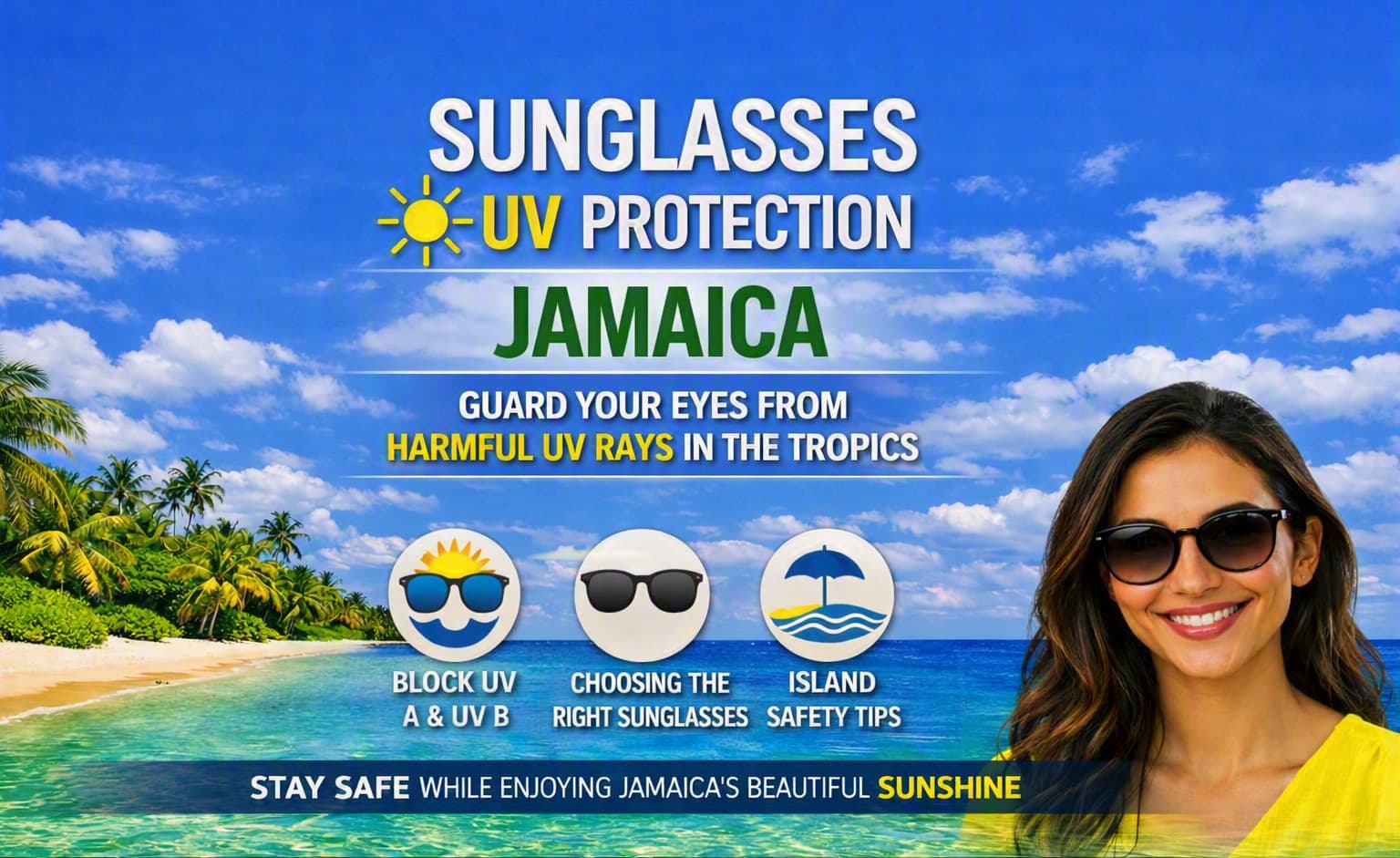
Living in Jamaica means enjoying plenty of sunshine, whether you are spending the day at the beach, driving along the coast, exploring Montego Bay, or walking around town. But that beautiful tropical sunlight also makes choosing the right sunglasses more important than simply finding a style you like.
Sunglasses and UV protection go hand in hand. Good sunglasses should do more than reduce brightness or complete your outfit. They should provide appropriate ultraviolet (UV) protection while giving you comfortable, clear vision for the activities you enjoy every day.
Key takeaway:
The best sunglasses in Jamaica are not just the darkest or the most fashionable. They are the ones that protect your eyes, fit your lifestyle, and help you see clearly in bright conditions.
Why UV Protection Matters in Jamaica
Ultraviolet radiation is invisible, so you cannot judge the level of UV protection provided by sunglasses simply by looking at the lenses.
This is one reason it is important not to confuse dark lenses with UV protection. A lens can look very dark without necessarily providing the level of UV protection you need. When choosing sunglasses, look for lenses specifically designed to block harmful UV radiation.
For people living in or visiting Jamaica, sunglasses can be particularly useful during extended outdoor activities. Beach days, boating, sightseeing, outdoor sports, walking, and driving can all involve significant exposure to bright sunlight.
Quality sunglasses can also make bright outdoor environments more comfortable by reducing the amount of visible light reaching your eyes.
Important: A darker lens does not automatically equal safer or better protection. Always check the UV specifications.
Polarized vs. Non-Polarized Sunglasses: Which Is Best for Jamaica?
If you are shopping for sunglasses in Jamaica, you will probably come across both polarized and non-polarized options.
The answer depends on how you plan to use your sunglasses. Polarized lenses are designed to reduce glare, particularly reflected glare from surfaces such as water, roads, and other bright surfaces. This can make them especially useful for driving, spending time near the ocean, fishing, boating, and other outdoor activities.
Non-polarized sunglasses can still be an excellent choice when the main priority is UV protection, appearance, prescription requirements, or general everyday wear.
The important point is that polarization and UV protection are not the same thing. A pair of sunglasses should not be considered adequately protective simply because it is polarized.
Best Sunglasses for Driving in Jamaica
Driving in Jamaica can expose you to rapidly changing lighting conditions. Bright sunlight, reflections from vehicles and roads, and transitions between sunny and shaded areas can all affect visual comfort.
The right sunglasses should therefore help you manage brightness without compromising your ability to see clearly.
What to look for:
- UV protection: Your sunglasses should provide appropriate coverage from ultraviolet radiation.
- Glare reduction: Polarized lenses can be useful when reflected glare from roads or other surfaces is an issue.
- Good optical quality: Sunglasses should provide clear vision without distracting distortion.
- Comfortable fit: Frames should sit securely without sliding down your nose or creating pressure.
- Appropriate tint: Extremely dark lenses are not automatically better; comfort and clarity matter.
Mirrored, Gradient, or Solid Tint: Which Sunglasses Should You Choose?
Once you have considered UV protection and polarization, you will encounter another question: what type of lens tint is right for you?
Different lens treatments and tint styles can provide different visual experiences depending on your activities and lighting conditions.
Mirrored lenses
Mirrored lenses have a reflective coating that reduces the amount of light entering the lens. They can be appealing in bright outdoor environments and are popular for active lifestyles. However, the mirror finish should not be confused with UV protection.
Gradient lenses
Gradient lenses are darker at one part of the lens and gradually become lighter toward the other end. This design can be useful when you want protection from bright overhead light while keeping more visibility through the lower portion of the lens.
Solid-tint lenses
Solid-tint lenses have a relatively consistent level of tint throughout the lens. They are a straightforward option for general outdoor use and come in a variety of colors. The best tint is not necessarily the darkest one; instead, consider your activities, comfort, and visual needs.
Why Prescription Sunglasses Can Be a Smart Choice
If you already wear prescription glasses, you do not necessarily have to choose between clear vision and sun protection.
Prescription sunglasses combine vision correction with tinted lenses designed for outdoor use. This can be particularly convenient in Jamaica, where you may move frequently between indoor and outdoor environments.
Rather than wearing regular prescription glasses underneath oversized sunglasses, prescription sunglasses provide a single solution designed around your prescription.
If your prescription has changed recently, an eye examination can also help determine whether your current lenses still provide the correction you need.
Kids' Sunglasses: Why Your Child Needs UV Protection Too
Children spend plenty of time outdoors, making sunglasses an important consideration for families.
For kids, look for sunglasses that provide appropriate UV protection, fit securely and comfortably, are suitable for the child's age and activities, and have durable frames appropriate for everyday use.
Parents should also remember that sunglasses are only one part of good outdoor eye protection. A hat or other shade can provide additional protection from direct sunlight.
Not sure which sunglasses match your lifestyle?
We can help you compare lens options, fit, and UV protection so you choose a pair that works for driving, travel, beach days, and everyday wear.
How to Choose Sunglasses at an Eyewear Boutique in Montego Bay
With so many sunglasses available, it can be tempting to choose a pair based entirely on appearance.
But the best sunglasses are the ones that work for your eyes, your lifestyle, and the conditions in which you will use them.
At an eyewear boutique in Montego Bay, you can compare different frame shapes, lens colors, styles, and options rather than relying only on an online product photograph.
Think about where you will wear your sunglasses: driving, beach days, everyday use, outdoor sports, boating, travel, prescription vision correction, or for your children.
Sunglasses & UV Protection: A Simple Buying Checklist
- Do the lenses provide appropriate UV protection?
- Do I need polarized lenses because of glare?
- Will I use them mainly for driving, the beach, sports, or everyday activities?
- Would prescription sunglasses be more practical for me?
- Is the tint appropriate for how I will use the sunglasses?
- Does the frame fit comfortably and securely?
- If they are for my child, will the frame be comfortable and durable enough for regular use?
Find the Right Sunglasses in Montego Bay
Choosing sunglasses is about more than finding a frame that looks good. In Jamaica's bright outdoor environment, UV protection, visual comfort, lens characteristics, fit, and your everyday activitiesshould all be part of the decision.
Whether you are looking for polarized sunglasses for driving, prescription sunglasses for everyday wear, mirrored or gradient lenses, or protective options for your children, taking the time to compare your options can make a real difference to your outdoor experience.
If you are in Montego Bay or visiting Western Jamaica, explore the eyewear collection at Eyewear Accessories Optical and speak with the team about finding sunglasses that fit your visual needs and lifestyle.
Looking for your next pair of sunglasses in Jamaica?
Visit our eyewear boutique in Montego Bay and find sunglasses that match your lifestyle, prescription, and comfort needs.
Frequently Asked Questions About Sunglasses & UV Protection
Are darker sunglasses better for UV protection?
Not necessarily. Lens darkness affects how much visible light enters the eyes, while UV protection refers to the lens's ability to block ultraviolet radiation. Always check the UV protection specification rather than assuming darker means safer.
Are polarized sunglasses better than non-polarized sunglasses?
Polarized lenses are especially useful for reducing glare from roads, water, and reflective surfaces, but they are not automatically better for every situation. Your choice should still consider UV protection, lifestyle, and the activities you do most often.
Are polarized sunglasses automatically UV protective?
No. UV protection and polarization are separate features. A pair can be polarized and still not provide adequate UV protection unless the lens is specifically designed to block UV radiation.
What sunglasses are best for driving in Jamaica?
Look for sunglasses with proper UV protection, comfortable fit, clear optical quality, and enough light control for bright outdoor conditions. Polarized lenses may be helpful if glare is a common issue while driving.
What should I look for in children's sunglasses?
Choose a pair with UV protection, secure and comfortable fit, durable frames, and enough coverage for outdoor play. The best child sunglasses are the ones they can comfortably wear and keep on during the day.